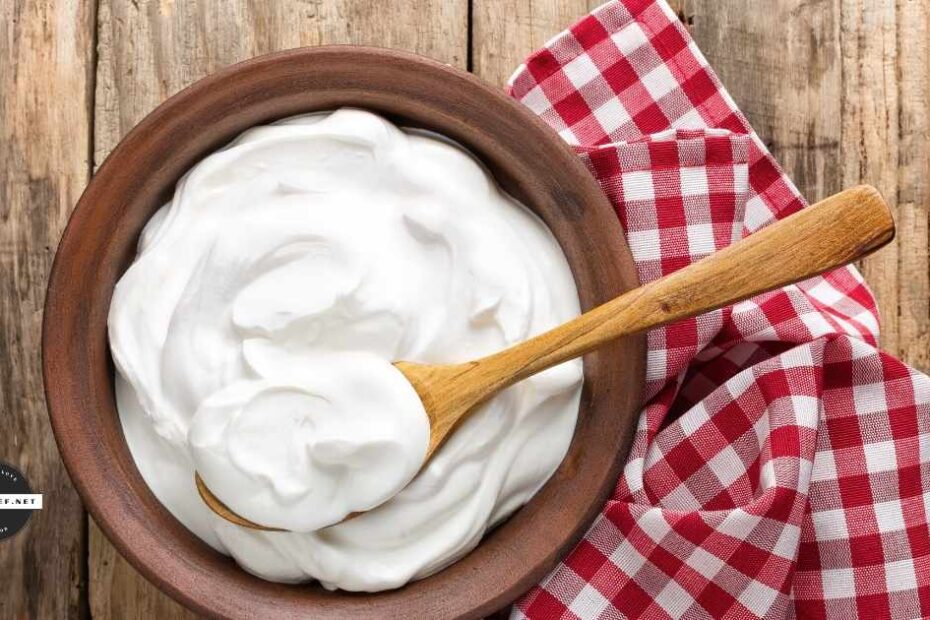
Wondering if you can substitute yogurt for sour cream? Good news: Yogurt is one of the easiest and most reliable sour cream substitutes. It has a nice tang, moisture, and lighter texture — the right things you want from sour cream, but with more protein and less fat.
Here’s what you need to know to swap yogurt for sour cream successfully in dips, sauces, and baked goods.
Read next: What does Greek yogurt taste like?

Can you substitute yogurt for sour cream?
Yes. You can substitute yogurt for sour cream at a 1:1 ratio in many recipes with good results. Greek yogurt works best, but you can also use strained regular plain yogurt.
Straining is ideal with plain yogurt because texture is the main difference between sour cream and yogurt. Greek yogurt is naturally thick, while plain yogurt is more watery. Straining adjusts for this. Here’s how to do it:
- Place a fine mesh strainer over a bowl and line it with cheesecloth, a coffee filter, or a clean paper towel.
- Spoon yogurt into the strainer.
- Let the yogurt drain for at least 10 minutes or up to 2 hours.
- Stir and check the thickness.
Best type of yogurt to use
You’ll see the best results with plain, full-fat Greek yogurt. Strained, full-fat plain yogurt is a good second option, but you’ll be disappointed with flavored and fat-free yogurts in lieu of sour cream.
- Greek yogurt is has more protein, less water, and smoother flavor than regular yogurt, so it fills in nicely for sour cream in cooked and baked recipes. By comparison, full-fat regular plain yogurt is thinner and tangier.
- Full-fat plain yogurt is an acceptable substitute for sour cream if you strain it for an hour.
- Reduced fat yogurts are often too thin and flavored yogurts will introduce new, sweeter elements that can conflict with your other recipe ingredients.
Read next: How to substitute for Greek yogurt
Substituting yogurt for sour cream, step by step
Yogurt for sour cream is one of the simpler substitutions, because the ratio is 1:1 and the adjustments are straightforward. Here’s what to do:
- Check your yogurt’s thickness. If it seems thin, you have two options. You can strain it as outlined above, or you can add a spoonful of cream cheese or mayo to add richness. Choose whichever approach sounds better for your recipe.
- Swap in yogurt for sour cream at a 1:1 ratio. Whatever amount of sour cream your recipe calls for, use the same measurement for the yogurt.
- Taste and adjust. Depending on the recipe, you may need to add a pinch of salt. Or a couple drops of honey might balance the flavors of your sauces or dressings.
Read next: How to substitute for cream cheese in baking
When the substitution works best
The yogurt-for-sour-cream substitution works well with certain dips and sauces, baked goods, and savory dishes.
Dips and sauces
- Ranch-style dips
- Tzatziki or garlic sauces
- Baked potato toppings
Yogurt works almost seamlessly here.
Baking
- Cakes, muffins, quick breads
- Pancakes and waffles
Yogurt keeps baked goods moist and tender. Expect slightly more tang and a softer crumb.
Read next: How to make Greek yogurt taste better
Savory dishes
- Casseroles
- Pasta sauces
- Marinades
Stir yogurt in after cooking or over low heat to prevent curdling.
When you need extra adjustments
You want to be careful using yogurt in high-heat recipes, ultra-rich recipes, and dishes that rely on texture.
- High-heat cooking. Yogurt can curdle if you boil it. Adjust for this by adding yogurt at the end of the cooking process.
- Ultra-rich recipes. Thick sauces and cheesecakes may require the addition of heavy cream or cream cheese if you don’t have full-fat Greek yogurt available.
- Texture-sensitive recipes. Frostings and fillings are trickier. If it works with the recipe, add cream cheese to get the texture you need.
Quick compare: Greek yogurt vs. sour cream
- Texture. Greek yogurt is slightly lighter than sour cream.
- Flavor. Both are tangy, but Greek yogurt can be sharper
- Fat. Greek yogurt has lower fat than sour cream.
- Protein. Greek yogurt has more protein than sour cream.
In most recipes, the differences between the two are subtle.
Quick tips for best results
- Use plain, full-fat Greek yogurt when possible.
- Strain thinner yogurt for better texture.
- Add yogurt at low heat or after cooking.
- Taste and adjust seasoning and texture as needed.
A straightforward substitution
Yogurt is one of the most practical sour cream substitutes you can use. With a simple 1:1 swap and a few small adjustments, you can use yogurt confidently in everything from dips to baked goods — often with lighter, more nutrient-dense results.