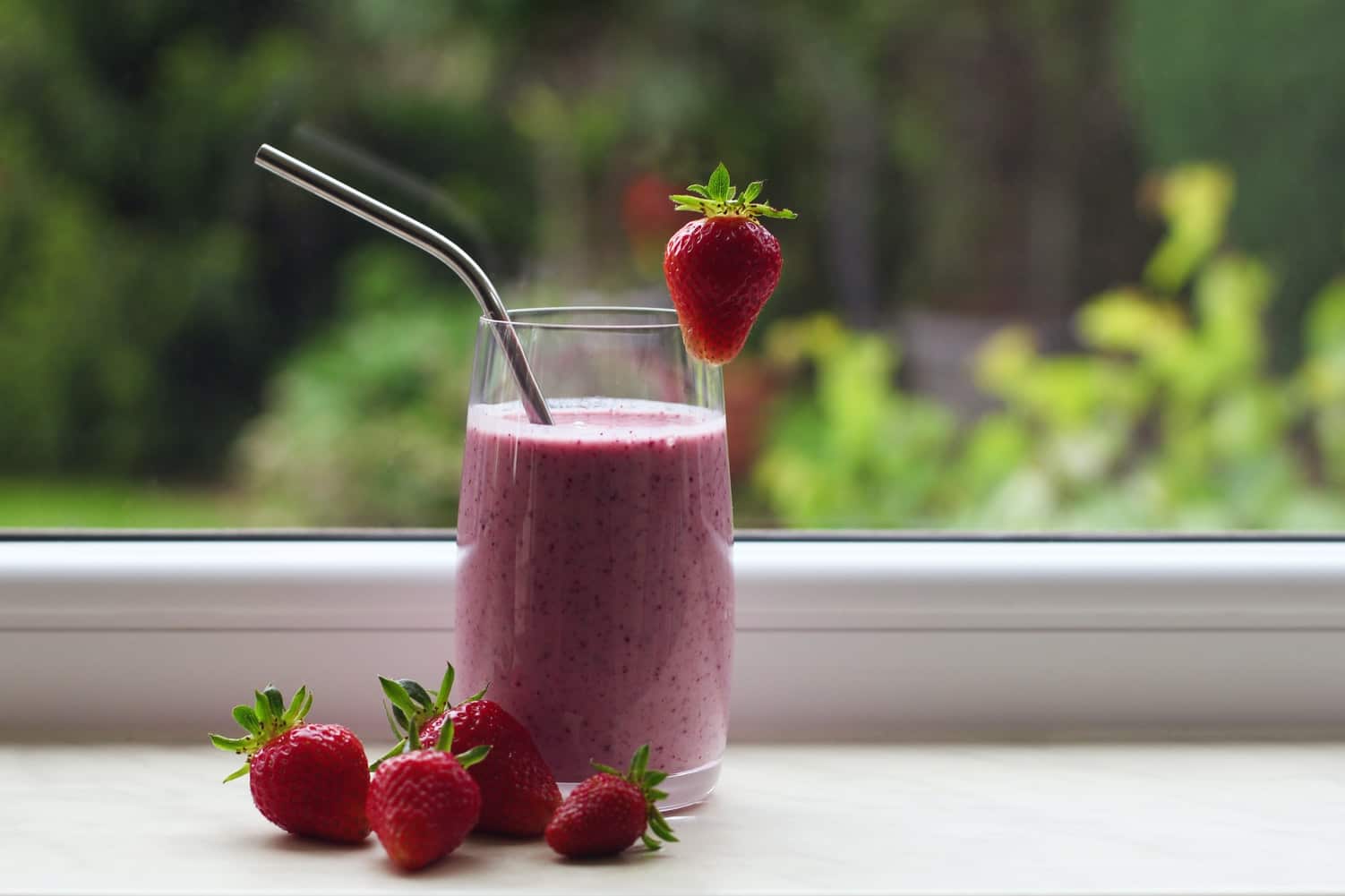
Smoothies easily add fruits, vegetables, and protein to your day. They work well for quick breakfasts, snacks, and light meals. But not all smoothies are actually “healthy.” Many store-bought versions are loaded with sugar and extra calories.
A good smoothie is balanced so it gives you energy and keeps you satisfied. Smoothies that are too sweet don’t serve either of those goals. You might feel good for about an hour before fatigue and hunger sets in.
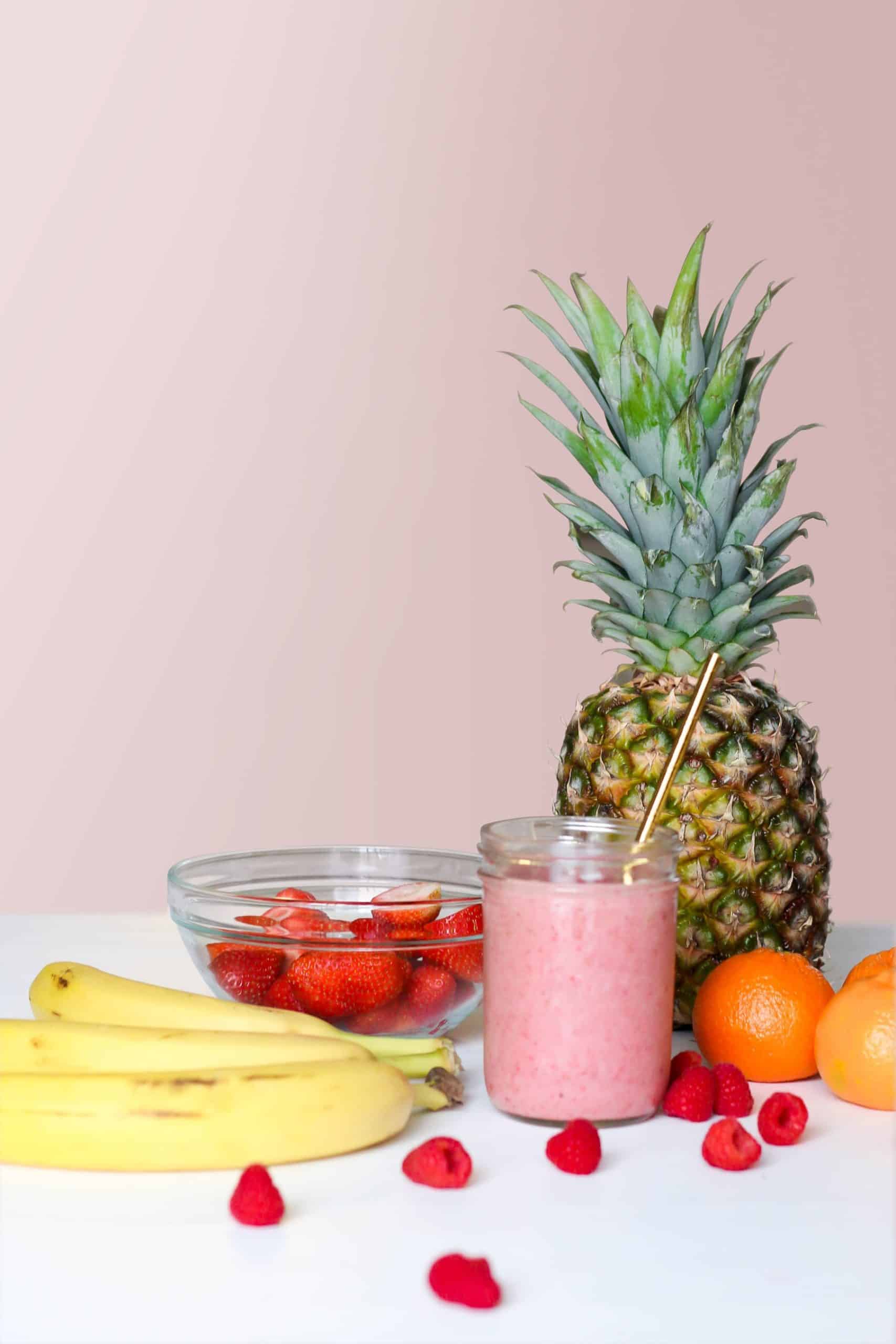
What makes a smoothie healthy
A healthy smoothie includes a mix of:
- Fruits or vegetables for natural sweetness and nutrients
- Protein to keep you full
- Healthy fats or fiber for satiety
- A liquid base to control consistency
Too much fruit, juice, added sweeteners, or fats can quickly turn a smoothie into a dessert — one that works against your healthy eating goals. An example is our strawberry smoothie recipe. It’s delicious but has too much sugar to be anything but a sweet treat. Our post-workout smoothie for weight loss has a better balance of ingredients with no added sugars.
How to make a balanced smoothie
Nutritious smoothies require careful choices for the base liquid, sweetening ingredients, nutrient-boosting ingredients, proteins, healthy fats, and flavoring agents.
1. Base liquid
Start with 3/4 cup of liquid. You can use dairy milk, nut milk, oat milk, or soy milk. Water also works, or a mix of yogurt or kefir and water. Keep your base liquid handy as you may need to add more to adjust the consistency.
I also like to add a handful of ice, because it makes the smoothie feel heartier with no extra calories.
Read next: Top substitutes for yogurt in smoothies
2. Sweetener
Fresh or frozen fruit add sweetness. Try berries, bananas, mangos, or pineapple. Frozen bananas are one of my favorite smoothie ingredients, because they add sweetness plus a thick, creamy texture.
Use 1/2 cup to 1 cup of whole fruit. Do not sub in fruit juice. Doing so lessens the fiber and increases the sugar.
Read next: Top substitutes for bananas in smoothies
3. Nutrition boosters
Use added veggies to boost nutrition without extra sugar. Spinach is an easy addition that blends smoothly and doesn’t affect the taste. You can also try kale, cucumber, zucchini, or beets.
4. Protein
Adding protein will make your smoothie more satisfying. This step is especially helpful if your smoothie is replacing a meal, but less necessary when it’s a snack.
Good protein options include Greek yogurt, nut butter, and protein powder.
Read next: 25+ healthy sweet snacks to satisfy your cravings
5. Healthy fats
Healthy fats enhance the richness of your smoothie, but they are high in calories. Less is more. Try chia or flax seeds, nuts, or nut butters.
6. Flavorings
If your smoothies need more flavor, try cinnamon, vanilla extract, cocoa powder, or — for green smoothies — fresh ginger.
Read next: Healthy granola recipe
Adjusting consistency
Even when you’re following a recipe, the smoothie’s consistency can easily be off. If it’s too thin, add ice or more veggies. If it’s too thick, add in water or some of your base liquid.
Smoothie mistakes to avoid
- Too much fruit. An overdose of fruit likely gives you too much sugar per serving.
- Too much sweetener. If you have a strong sweet tooth, you might be tempted to add honey, maple syrup, or agave to your smoothie. These can ramp up the sugar and calorie count of your smoothie quickly. Use them sparingly or not at all.
- Too many extras. Layering peanut butter and protein powder plus flax seeds, for example, could result in a very heavy and calorie-dense smoothie. It might be tasty, but hard to finish.
- Too big in size. Ignoring measurements and tossing in whatever feels right can create a smoothie that has 500 calories or more. That’s probably more than you want, especially if you’re enjoying it as a snack.
- Enjoying it alongside your meals. Smoothies are best as snacks or meal replacements. It might work against your weight and health goals if you sip a smoothie alongside eggs and toast for breakfast.
Make your own smoothie creations
One thing that’s nice about smoothies is that you can improvise on the ingredients. Use healthy ingredients you have and like. As long as you don’t overdo the sugars and fats, there aren’t too many downsides to experimenting.
For the record, my go-to smoothie is almond milk, frozen banana, a bit of peanut butter, a small scoop of protein powder, spinach leaves, and ice. It’s simple, indulgent, and satisfying.