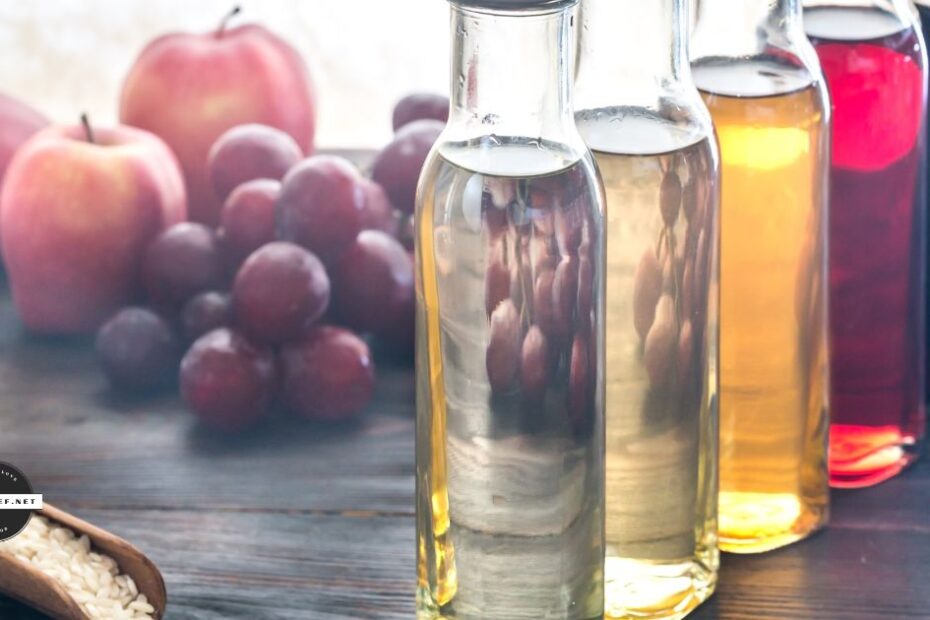
At this moment, I have six types of vinegar in my pantry. Six! Do I need them all? Technically, no. I can substitute for some of these ingredients…but each vinegar has its own personality and I like experimenting with them.
Still, maintaining a portfolio of vinegars eventually gets to be impractical. If you already have five or six of them on hand, you may not be thrilled to run out and grab the brown rice vinegar called out in your dinner recipe. When that happens, you’ll appreciate having a good understanding of common vinegar types and how they taste. That way, you can substitute one vinegar for another with confidence.

Put yourself in the kitchen
The first thing to do is get into your cooking mindset. You’re standing in the kitchen, holding a whisk. You’ve got guests arriving, and you need to deglaze a pan, whip up a salad dressing, or prep a fun international dish that’ll inspire a bunch of compliments. That’s when you need some vinegar mastery to carry you through.
What vinegar does
Let’s start with the basics. Vinegar provides acidity or sourness. That zing can:
- Enhance flavors
- Balance rich, fatty ingredients
- Highlight sweetness
Functionally, vinegar can also tenderize meats as a marinade and preserve food as a pickling liquid.
Each type of vinegar takes these actions in its own way, which affects how you make vinegar substitution decisions.
Basic vinegar flavor profiles
Vinegar substitutions make more sense when you know the basic flavor profiles you’re working with. Here’s a closer look at the most common of them. Pro-tip: To get a true feel for the nuances of vinegars, do a home tasting. Slice some French bread and pour different vinegars into tasting dishes with a bit of mild olive oil. Dip your bread in each and note how they differ.
Balsamic vinegar, dark and white
Traditional dark balsamic vinegar is rich, sweet, and slightly syrupy, with a deep, caramelized flavor. White balsamic vinegar is lighter in color and milder in taste. It sweetens dishes, but does not add a dark color.
Both balsamics are commonly used in salad dressings, glazes, roasted vegetables, and finishing dishes where balance matters.
Read next: 5 substitutes for white balsamic vinegar and 2 to avoid
While white and dark balsamic vinegars are related, they normally do not substitute well for one another. White balsamic vinegar is more like a sweet white wine vinegar, while dark balsamic vinegar is in its own category.
Read next: What does balsamic vinegar taste like?
Wine vinegars
Red wine, white wine, champagne, and sherry vinegars are made from fermented wine. These usually have clean, sharp acidity with subtle fruit notes.
Wine vinegars are commonly used in vinaigrettes, pan sauces, marinades, and reductions.
Rice vinegar
Rice vinegar is milder than many Western vinegars and slightly sweet. It’s widely used in Asian cooking, sushi rice, pickles, and stir-fries.
Seasoned rice vinegar includes added sugar and salt, which changes how you handle a substitution.
Read next: Top rice vinegar substitutes
Apple cider vinegar
Apple cider vinegar is tangy, fruity, and very sharp. Some find the taste overpowering and difficult to use, but it is popular in dressings, marinades, sauces, and home remedies.
Read next: What can you substitute for apple cider vinegar?
Specialty vinegars
Coconut vinegar, cane vinegar, and Chinese black vinegar (Chinkiang) have distinct flavor profiles tied to regional cuisines. These usually require more thoughtful substitutions to maintain balance.
Choosing the right vinegar substitute
Three variables should guide your vinegar substitution choices: acidity, sweetness, and color. Acidity refers to the sharpness of the vinegar’s flavor. Sweetness balances acidity, making it taste smoother and less aggressive.
Vinegars by acidity
Distilled white vinegar is the most acidic. Wine vinegars and apple cider vinegar are less acidic, and balsamic vinegars are the least acidic.
Vinegars by sweetness
Here’s my attempt at ranking common vinegars from sweetest to least sweet:
- Traditional balsamic
- White balsamic
- Sherry vinegar
- Seasoned rice vinegar
- Rice vinegar
- Champagne vinegar
- Apple cider vinegar
- Red wine vinegar
- White wine vinegar
- Chiankiang vinegar
- Distilled white vinegar
Pro tips: If you want to substitute a vinegar for one that’s not as sweet, you can add sugar in pinches to taste. You can also make a vinegar taste sharper by adding a tiny bit of lemon juice. Note that the lemon juice will change the flavor slightly by adding citrus notes.
When vinegar substitutes work best
It’s usually easiest to substitute vinegars in dressings, vinaigrettes, marinades, sauces, and when deglazing a pan. These applications often don’t use vinegar as the primary flavor, so your substitution will be more forgiving. The dish might taste or look slightly different if you swap in another vinegar — say, white vinegar for apple cider vinegar — but it won’t be as noticeable as it would be in recipes that showcase vinegar.
Pickling and baking recipes are more challenging for vinegar substitutions.
Read next: Can I substitute rice vinegar for white wine vinegar?
Find the right vinegar substitutes
- Champagne vinegar substitutes
- Sherry vinegar substitutes
- Coconut vinegar substitutes
- Tarragon vinegar substitutes
- Cane vinegar substitutes
- Red wine vinegar substitutes
- White vinegar substitutes
- Brown rice vinegar substitutes
With vinegar, balance is key
Balance is the key to experimenting with vinegars in the kitchen. To try a substitution for the first time, start with a small amount, taste as you go, and adjust with sugar or a tiny bit of lemon juice. You’ll gain confidence quickly as you learn how each vinegar behaves. That’s when you can start having fun with vinegar substitutions — and designing your own vinegar-based recipes.