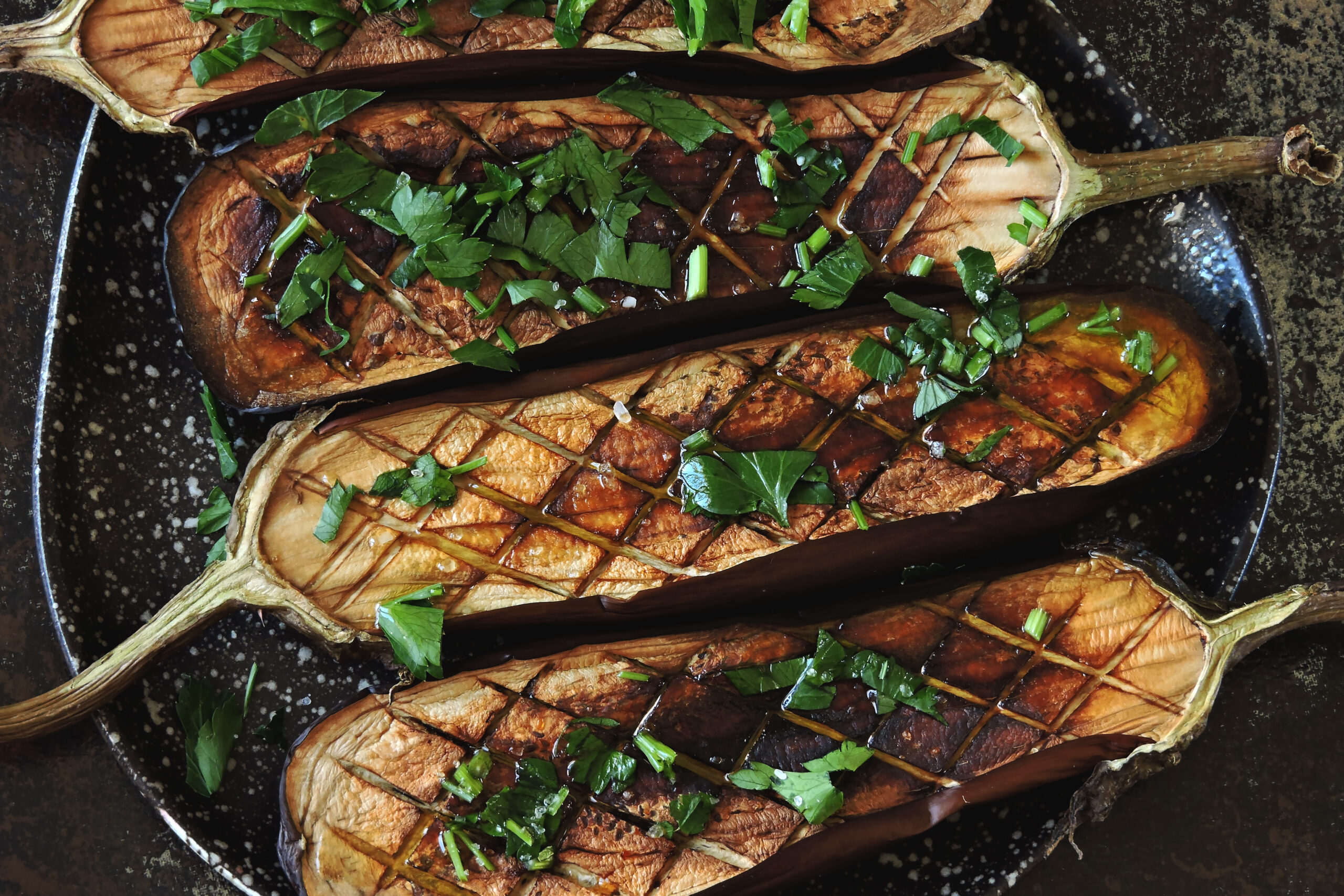
One of the best ways to cook eggplant is to sauté it and cook it on a stovetop. There are several cooking methods, including baking, roasting, frying, stir-frying, broiling, and grilling. You must cook it thoroughly when you’re cooking eggplant.
Your eggplant will have its own flavor; on the outside, the texture will be tender and crispy, and on the inside, it will be mellow and soft. It will also have a very smooth and creamy texture, and it can be perfectly served as a side or on its own. The dish is salty and enhanced by the garlic and onion’s delicious flavors and a calm sesame flavor.
If you want to add your eggplant to soups or stews, you should add it 10 to 15 minutes before you finish cooking to prevent it from being soft or mushy.
If you’re looking for how to cook a very tasty eggplant, keep reading ahead for some tips.
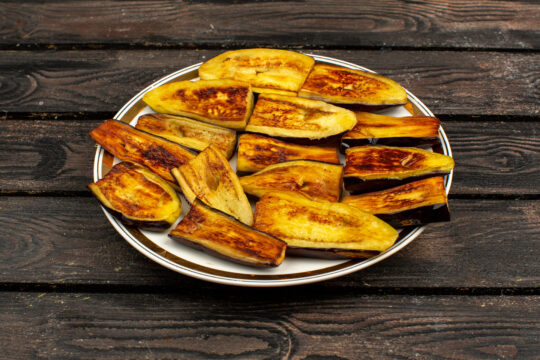
Eggplants nutrition facts
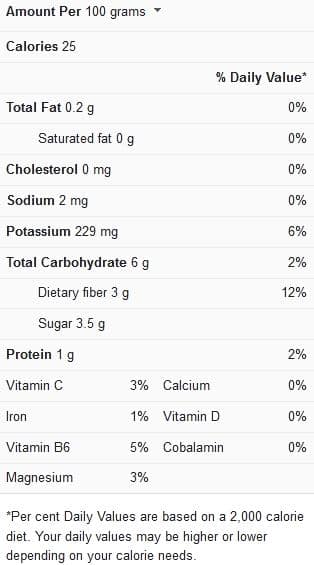
Tips to know when cooking a pan-seared eggplant
- Aluminum cookware can get discolored when used to cook eggplants, therefore, avoid when cooking eggplant in the cookware.
- When you salt the eggplant after sitting for a while, make sure you clean or wipe the salt off it. Eggplants can absorb water; therefore, they do not wash the salt off. Instead, you wipe it off.
- It is important to know that the over mature or larger will be more bitter than the smaller and ripe eggplants when shopping for eggplants.
- You can decrease the amount of oil that eggplants absorb when frying by coating the eggplants with breadcrumbs or batter or dredging its slices in flour.
- How thick you slice your eggplants depends on how long it takes to cook them. As a rule of thumb, the thickness of your eggplant should aim to be 1/4 inch in size.
- You can also change up the spices to whichever you want. The most recommended ones are cayenne pepper and red pepper flakes, as this gives your dish a fantastic spicy kick.
How to cook eggplants on stove
Ingredients
- 1 eggplant
- Flour
- Plain bread crumbs
- Parmesan cheese
- Onion and Garlic powder
- Ground black pepper
Instructions
STEP 1: Slice and salt the eggplant so the eggplant can cook evenly, this will prevent undercooking. Heat the oil until it is very hot but not to the extent that it will be smoking. To prevent soaking up the eggplant in too much oil, use a small amount of oil in a non-stick pan. Using a small amount of oil will ensure that the eggplant is crispy on the outside, while it is soft on the inside.
Add the sliced eggplant, onion and garlic powder, sesame oil and minced garlic into a mixing bowl and mix them very well until they are combined.
STEP 2: While the oil is hot, add the sliced and seasoned slices to pan. Cook, turning often, for about 10 minutes. Slightly turn down the heat if you notice that the eggplants are cooking too fast.
STEP 3: Remove the slices from the stovetop and put them on a plate with paper towel lined in it, when you notice that the slices have turned dark golden brown. Any excess oil will be absorbed by the paper towels. Serve it while it’s hot after seasoning it with salt and pepper to taste.
Storing and freezing fried eggplant
Storing: When covered, you can store the fried eggplant in the refrigerator, and it can last well for up to 5 days.
Freezing: You can store the leftover eggplant in the freezer in a shallow container, and this can last for up to 6 months.
Reheating: The best way to reheat the eggplant is in a non-stick pan until it is fragrant and warm rather than being microwaved.
Cooking time for eggplant
The different timing guidelines to follow when cooking eggplants can be seen below:
| Cooking method | Cooking time |
| Prepping and Frying | 10 to 15 minutes |
| Prepping and Grilling or broiling | 15 to 20 minutes |
| Stir-Frying | 15 minutes |