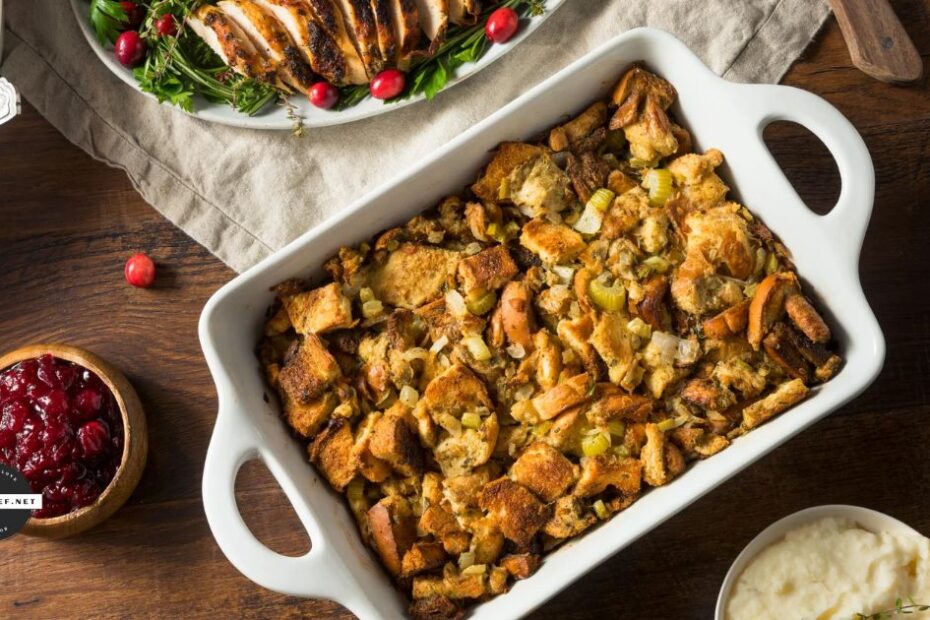
Stuffing takes about 40 to 50 minutes to cook in a 350°F oven, depending on the recipe and how deeply it’s packed into the baking dish. Cover it with foil for the first 30 minutes to keep the bread moist, then uncover it for the last 10 to 20 minutes to get that golden, slightly crispy top. The center should reach 165°F before serving.
My humble opinion: stuffing is the best part of Thanksgiving dinner. Turkey gets the attention, but a good stuffing is like the center midfielder who sets up the striker. Buttery bread, savory herbs, and crispy edges create the backdrop a good turkey needs to steal the show. Also, stuffing is pretty forgiving, which is very useful when there are six other things happening in the kitchen.
You can make stuffing from scratch, dress up a boxed mix, or add ingredients like sausage, mushrooms, apples, and dried cranberries. I’ll walk you through the oven cooking times, how to keep stuffing moist without making it soggy, and how to prepare it ahead of time. Because any hack that frees up oven space on Thanksgiving deserves serious consideration.
Read next: The ultimate whole-turkey roasting guide
- Bake turkey stuffing at 350°F for about 40 to 50 minutes, until the center reaches a safe internal temperature of 165°F.
- Keep stuffing moist with broth and butter, then uncover it near the end of baking for golden, crispy edges.
- Customize stuffing with sausage, mushrooms, apples, or herbs, and refrigerate cooked leftovers for up to 4 days or freeze for longer storage.
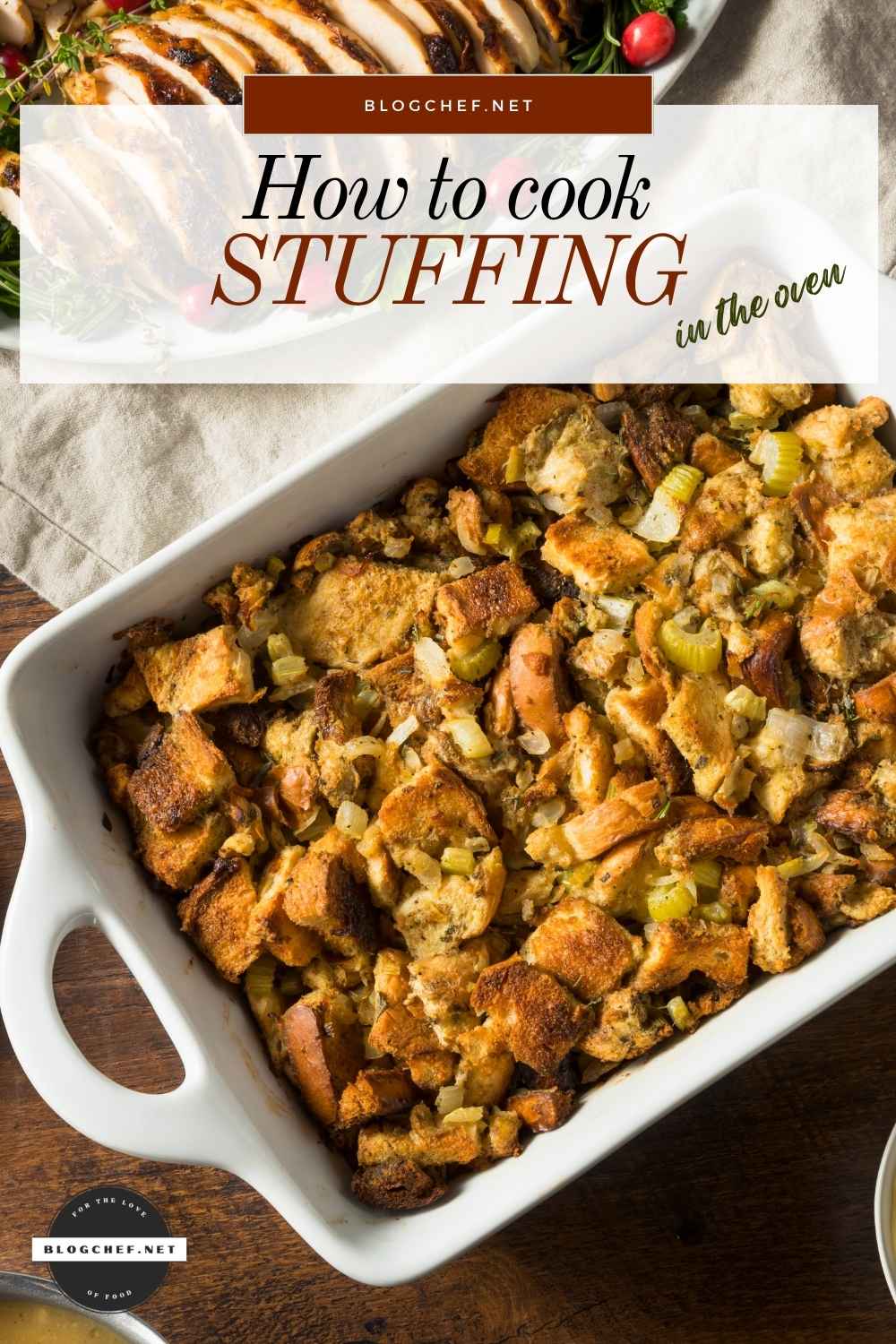
How long to cook stuffing in the oven
The ideal cooking time depends on your oven temperature, how much stuffing you have, and whether you’re starting with freshly prepared ingredients or reheating a cooked dish.
Here are timing guidelines for a typical 9-by-13-inch baking dish filled with about 2 inches of stuffing. These times are for freshly assembled stuffing baked in a casserole dish, not leftovers.
| Oven temperature | Approximate cooking time |
|---|---|
| 325°F | 45–60 minutes |
| 350°F | 40–50 minutes |
| 375°F | 35–45 minutes |
| 400°F | 30–40 minutes |
I like cooking stuffing at 350°F because it’s hot enough to cook the dish thoroughly without drying out the bread. If you’re sharing oven space with other Thanksgiving dishes, 375°F or 400°F can work, too. Just start checking earlier.
Whatever temperature you choose, use a food thermometer to make sure the center reaches 165°F. A golden top is nice, but it doesn’t tell you whether the middle is fully cooked.
How to cook stuffing in the oven
You don’t need a complicated recipe to make delicious oven-baked stuffing. Any stuffing dish involves combining dried bread with sautéed vegetables, butter, herbs, and enough broth to moisten everything. Then bake until the center is hot and the top is golden.
Here’s a simple version that you can customize with your favorite seasonings and add-ins. You may also want to see my cornbread stuffing guide.
Print
Simple turkey stuffing
- Prep Time: 20 min
- Cook Time: 60 min
- Total Time: 1 hour, 20 minutes
- Yield: 8 servings 1x
- Category: Side Dish
- Method: Baking
- Cuisine: American
Description
Classic oven-baked turkey stuffing made with buttery bread cubes, sautéed onions and celery, savory herbs, and broth, with a moist center and golden, crispy edges.
Ingredients
- 8 cups dried bread cubes, about 12 ounces
- 1/2 cup unsalted butter
- 1 medium onion, diced
- 3 celery stalks, diced
- 2 cloves garlic, minced
- 2 to 2 1/2 cups chicken or vegetable broth
- 2 large eggs, lightly beaten
- 1 tablespoon chopped fresh sage, or 1 teaspoon dried
- 1 tablespoon chopped fresh thyme, or 1 teaspoon dried
- 2 tablespoons chopped fresh parsley
- 1/2 teaspoon salt, or to taste
- 1/2 teaspoon black pepper
Instructions
- Prepare the bread. Preheat your oven to 350°F and grease a 9-by-13-inch baking dish. If your bread isn’t already dry, spread the cubes on a baking sheet and toast at 250°F for 30 to 45 minutes, stirring occasionally. You want the bread dry enough to absorb the broth without falling apart.
- Cook the vegetables. Melt the butter in a large skillet over medium heat. Add the onion and celery and cook for 5 to 7 minutes, until softened. Stir in the garlic, sage, thyme, parsley, salt, and pepper, and cook for another minute.
- Mix the stuffing. Place the bread cubes in a large bowl and add the butter and vegetable mixture. Pour in 2 cups of broth and toss gently. The bread should be evenly moistened but not swimming in liquid. Add more broth a little at a time if needed. Stir in the beaten eggs until everything is combined.
- Bake the stuffing. Transfer the mixture to the prepared baking dish and spread it evenly without packing it down tightly. Cover with foil and bake for 30 minutes. Remove the foil and continue baking for 10 to 20 minutes, until the top is golden and the center reaches 165°F.
- Serve warm. Let the stuffing stand for about 5 minutes before serving. If you like extra-crispy edges, leave it uncovered for a few more minutes in the oven, watching carefully so the top doesn’t burn.
Nutrition
- Serving Size:
- Calories: 251
- Sugar: 3.9 g
- Sodium: 535.8 mg
- Fat: 14.3 g
- Carbohydrates: 25 g
- Protein: 6 g
- Cholesterol: 77 mg
Should you cover stuffing when baking?
Yes, at least for part of the cooking time. Covering the baking dish with foil traps moisture and helps the bread heat evenly without drying out. I like to keep stuffing covered for the first two-thirds of baking, then remove the foil to let the top brown. That gives you the best of both worlds: soft, flavorful bread underneath and a little crunch on top.
If you prefer very soft stuffing, leave the foil on longer. If you’re firmly on team crispy edges, uncover it earlier or spread the mixture into a slightly larger baking dish. Since thinner layers cook faster, start checking the temperature early if you change the pan size.
How to tell when stuffing is done
Properly cooked stuffing should be hot throughout, moist in the center, and lightly browned on top. The bread should hold together loosely when you scoop it, rather than looking dry and crumbly or wet and mushy.
The most reliable test is a food thermometer. Insert it into the thickest part of the stuffing, away from the sides or bottom of the baking dish. The center needs to reach 165°F.
If the top is getting too brown before the center reaches temperature, cover it loosely with foil and continue baking. If the center is cooked but the top looks pale, uncover the dish for a few more minutes.
Why stuffing needs to reach 165°F
The USDA recommends cooking stuffing to an internal temperature of 165°F, whether it’s baked in a casserole dish or cooked inside a turkey.
Stuffing is a moist mixture that may contain eggs, broth, meat, and other perishable ingredients. Cooking it thoroughly reduces the risk of foodborne illness. This is especially important when stuffing is cooked inside poultry. The turkey meat can reach its safe temperature before the stuffing in the cavity is fully cooked. That’s one reason I prefer baking stuffing separately. It’s easier to check the temperature, easier to control the texture, and you can get those crispy edges that don’t develop inside the bird.
If you do stuff a turkey, add the prepared stuffing immediately before roasting. Both the turkey and the center of the stuffing must reach 165°F. Let the cooked bird rest for about 20 minutes before removing the stuffing.
Don’t rely on color or texture alone. A thermometer is the best way to know your stuffing is ready.
How to keep stuffing moist without making it soggy
The difference between great stuffing and a pan of wet bread usually comes down to how much liquid you add. You want the bread cubes to absorb the broth while still holding their shape. If you squeeze a small handful of the mixture, it should feel moist and hold together loosely, but liquid shouldn’t drip out.
These guidelines make big difference.
- Start with dry bread. Fresh, soft bread can turn mushy when you add broth. Day-old bread works well, but lightly toasting the cubes gives you more consistent results.
- Add broth gradually. Start with less than you think you need. You can always add another splash, but removing excess liquid is considerably harder.
- Use enough butter. Butter adds flavor and richness while helping the bread stay tender.
- Pack the dish loosely. Spread the mixture evenly and press it down lightly, if at all. A tightly packed casserole can become dense.
- Bake covered, then uncovered. This keeps the center moist while allowing the top to develop some color and texture.
If the stuffing looks dry before baking, add a little more broth. If it looks too wet, fold in a handful of additional dried bread cubes and give them a few minutes to absorb the liquid.
Best seasonings for stuffing
Sage is probably the herb most people associate with traditional Thanksgiving stuffing, and for good reason. Its earthy, slightly peppery flavor works beautifully with bread, butter, onions, and celery.
But you don’t have to stop at sage. Stuffing is one of those dishes you can adjust to match the rest of your menu.
| Seasoning | Flavor it adds |
|---|---|
| Sage | Earthy, savory, classic Thanksgiving flavor |
| Thyme | Mildly herbal with a slightly woodsy note |
| Rosemary | Fragrant, pine-like flavor |
| Parsley | Fresh, mild flavor that balances richer ingredients |
| Poultry seasoning | Convenient blend of traditional stuffing herbs |
| Garlic | Savory depth without needing much |
| Black pepper | Gentle heat and a little bite |
| Smoked paprika | Subtle smoky flavor, especially good with sausage |
For a traditional stuffing, I like sage, thyme, parsley, salt, and black pepper. If you’re using poultry seasoning, check the ingredient list before adding more herbs. You don’t want to double up on sage by accident.
Fresh herbs give stuffing a brighter flavor, but dried herbs work perfectly well. As a general rule, use about one-third as much dried herb as fresh.
Easy add-ins for oven-baked stuffing
Once you’ve got the basic bread, butter, and broth mixture figured out, there are plenty of ways to make stuffing your own.
Sausage
Brown ½ to 1 pound of breakfast sausage or Italian sausage, drain excess fat if needed, and fold it into the stuffing before baking. Sausage adds richness and plenty of savory flavor, so taste the mixture before adding extra salt.
Mushrooms
Sauté 8 ounces of chopped mushrooms until they’ve released their moisture and started to brown. Then mix them into the stuffing. Mushrooms add an earthy flavor that works particularly well with thyme and rosemary.
Apples
Add 1 diced apple for a little sweetness and texture. Granny Smith apples hold their shape well, while Honeycrisp adds a sweeter flavor. I like apples with sausage stuffing because the sweetness balances the richness.
Dried cranberries
Stir in ½ cup of dried cranberries for a sweet-tart contrast. They work especially well with sage, pecans, and cornbread stuffing.
Pecans or walnuts
Add ½ cup of chopped, toasted nuts for crunch. Fold them into the stuffing before baking or sprinkle them over the top near the end if you want them to stay crisp.
Bacon
Cook 4 to 6 slices of bacon until crisp, crumble them, and add them to the mixture. You can also use a little of the rendered bacon fat in place of some of the butter.
I wouldn’t use every add-in at once. Sausage and apple, mushrooms and thyme, or cranberries and pecans are all good combinations. The goal is flavorful stuffing, not a casserole containing everything left in the refrigerator.
Can you make stuffing ahead of time?
Yes, and if you’re cooking Thanksgiving dinner, I recommend doing at least some of the work ahead. Stuffing doesn’t need to be another last-minute project competing with the turkey.
You can start preparing the ingredients separately a day or two in advance. Cube and dry the bread, chop the vegetables, and measure the herbs. Refrigerate perishable ingredients separately and keep the dry bread in an airtight container. When you’re ready to cook, sauté the vegetables, combine the ingredients, and bake as directed.
If you want to make the entire dish ahead, bake the stuffing completely first, then refrigerate it promptly in shallow containers. Reheat it to 165°F before serving.
How to reheat stuffing in the oven at 400°F
If you’ve already cooked your stuffing, reheating it at 400°F is a quick way to get it hot again while restoring some of the crispy texture on top. A refrigerated 9-by-13-inch dish of cooked stuffing will heat in about 25 to 40 minutes at 400°F, depending on how much stuffing you have and how cold it is. A deep, tightly packed casserole may need longer.
Here are the steps.
- Preheat the oven. Heat your oven to 400°F and transfer the refrigerated stuffing to an oven-safe baking dish if necessary.
- Add moisture. Drizzle 2 to 4 tablespoons of broth over the stuffing if it looks dry. You don’t need much. The idea is to keep the bread from drying out while it heats.
- Cover and reheat. Cover the dish with foil and bake for about 10 to 15 minutes. Remove the foil and continue baking for another 5 to 10 minutes, until the top is lightly crisp and the center reaches 165°F.
- Serve immediately. Check the temperature in the middle of the dish before serving. If it needs more time, cover it again to prevent the top from getting too dark.
For smaller portions, you can reheat stuffing in a skillet with a little butter or broth. The microwave also works, although you’ll lose the crispy top. I prefer the oven when I’m reheating enough for several people. It’s mostly hands-off, and the texture comes much closer to freshly baked stuffing.
How to store leftover stuffing
- Leftover stuffing should be refrigerated within 2 hours of cooking or serving. Transfer it to shallow, airtight containers so it cools quickly rather than leaving a large, hot casserole sitting on the counter.
- Cooked stuffing keeps for 3 to 4 days in the refrigerator at 40°F or below. That includes stuffing baked separately and stuffing cooked inside a turkey. If you cooked the stuffing inside poultry, remove it from the bird and store it separately.
- Reheat leftovers to 165°F before eating. And if you know you won’t finish the stuffing within four days, freeze it rather than hoping it’ll still be good next week. Thanksgiving leftovers are wonderful, but they do have an expiration date.
Can you freeze stuffing?
Yes! Stuffing freezes well, especially when it’s made with sturdy bread cubes and isn’t overly wet. I prefer freezing fully cooked stuffing because it makes reheating easy. Once the stuffing has cooled enough for safe handling, portion it into airtight freezer-safe containers or bags and freeze promptly.
For the best flavor and texture, try to use frozen stuffing within two to three months. It can remain safe longer if continuously frozen at 0°F, but the bread may gradually lose quality.
To reheat, thaw the stuffing overnight in the refrigerator. Transfer it to a baking dish, add a little broth if needed, and heat in a 350°F or 400°F oven until the center reaches 165°F.
You can also freeze stuffing before baking, but it should go into the freezer promptly after assembly rather than sitting uncooked in the refrigerator. Bake it thoroughly after freezing or thawing safely, and check that the center reaches 165°F.
Common stuffing problems and how to fix them
Too dry
Dry stuffing needs more broth or extra butter. If you notice the problem before baking, add broth a few tablespoons at a time and toss gently. If it’s already cooked, drizzle warm broth over the top, cover with foil, and return it to the oven briefly. The trapped steam will help soften the bread.
Too soggy
Too much broth or bread that wasn’t dry enough can leave stuffing mushy. If the mixture is still uncooked, fold in more dried bread cubes and give them time to absorb the excess moisture. If it’s already baked, uncover the dish and continue cooking for a few minutes to evaporate some moisture. This may help the top, although it won’t completely fix stuffing that’s saturated with liquid.
Burned top, cold middle
Cover the dish with foil and reduce the oven temperature slightly if necessary. Continue baking until the center reaches 165°F.
No flavor
Bread absorbs a surprising amount of seasoning, so stuffing can need more salt and herbs than you’d expect. Make sure the broth is flavorful, sauté the vegetables in butter, and use enough sage, thyme, and pepper. If the stuffing is already cooked, a little melted butter, fresh parsley, or a spoonful of warm, well-seasoned broth can help.
Frequently asked questions
Is stuffing better at 350°F or 375°F?
Both temperatures work well. I prefer 350°F because it’s a little more forgiving and gives the stuffing time to heat through without drying out. At 375°F, the top browns faster, which is great if you like crispy edges. Just start checking the center earlier.
Can you cook stuffing at 400°F?
Yes. Freshly assembled stuffing generally takes about 30 to 40 minutes at 400°F, depending on the depth of the baking dish. Keep it covered for most of the cooking time to prevent the top from drying out, then uncover it to brown. The center must reach 165°F.
Is it better to cook stuffing inside or outside the turkey?
I vote for outside. Baking stuffing in a casserole dish gives you better control over the texture, makes it easier to check the temperature, and produces those crispy edges everyone fights over. Stuffing cooked inside a turkey can be delicious, but the center must reach 165°F, which may mean the turkey needs additional cooking time.
Can you make stuffing the night before and bake it the next day?
You can prepare the ingredients the night before, but keep the wet and dry components separate until you’re ready to bake. If you want to assemble the entire dish in advance, the safer approach is to bake it completely, refrigerate it promptly, and reheat it to 165°F the next day. Another option is to assemble it and freeze it immediately.
How do you reheat stuffing without drying it out?
Add a few tablespoons of broth, cover the baking dish with foil, and reheat until the center reaches 165°F. Remove the foil near the end if you want the top to crisp up. The trick is adding just enough moisture to revive the bread without turning it soggy.
How long does leftover stuffing last?
Cooked stuffing keeps for three to four days in the refrigerator when stored properly at 40°F or below. If you’re not going to eat it within that time, freeze it. Reheat leftovers to 165°F before serving.
Blogchef takeaway
The best oven-baked stuffing has a bit of everything: soft, buttery bread in the middle, savory herbs throughout, and golden edges with just enough crunch.
For most recipes, baking at 350°F for 40 to 50 minutes is a good starting point. Cover the dish to keep the bread moist, uncover it to brown the top, and check that the center reaches 165°F.
And if you’re making stuffing for Thanksgiving, take advantage of the make-ahead options. There’s no reason to spend Thursday chopping celery when you could be concentrating on the turkey — or, better yet, enjoying an appetizer while delegating someone else to oversee the bird.