The carnivore diet is one of the simplest — and most restrictive — ways to eat: You build meals around animal-based foods and skip plant foods entirely. Some people try it for weight loss, appetite control, or as a short-term elimination approach. Others quit quickly because it can be hard on digestion, tricky socially, and difficult to sustain.
In this post, I’ll walk through what a carnivore meal plan looks like, share a 7-day sample menu, and provide a realistic look at the pros, cons, health considerations, and what to expect when you start.
What is a carnivore diet
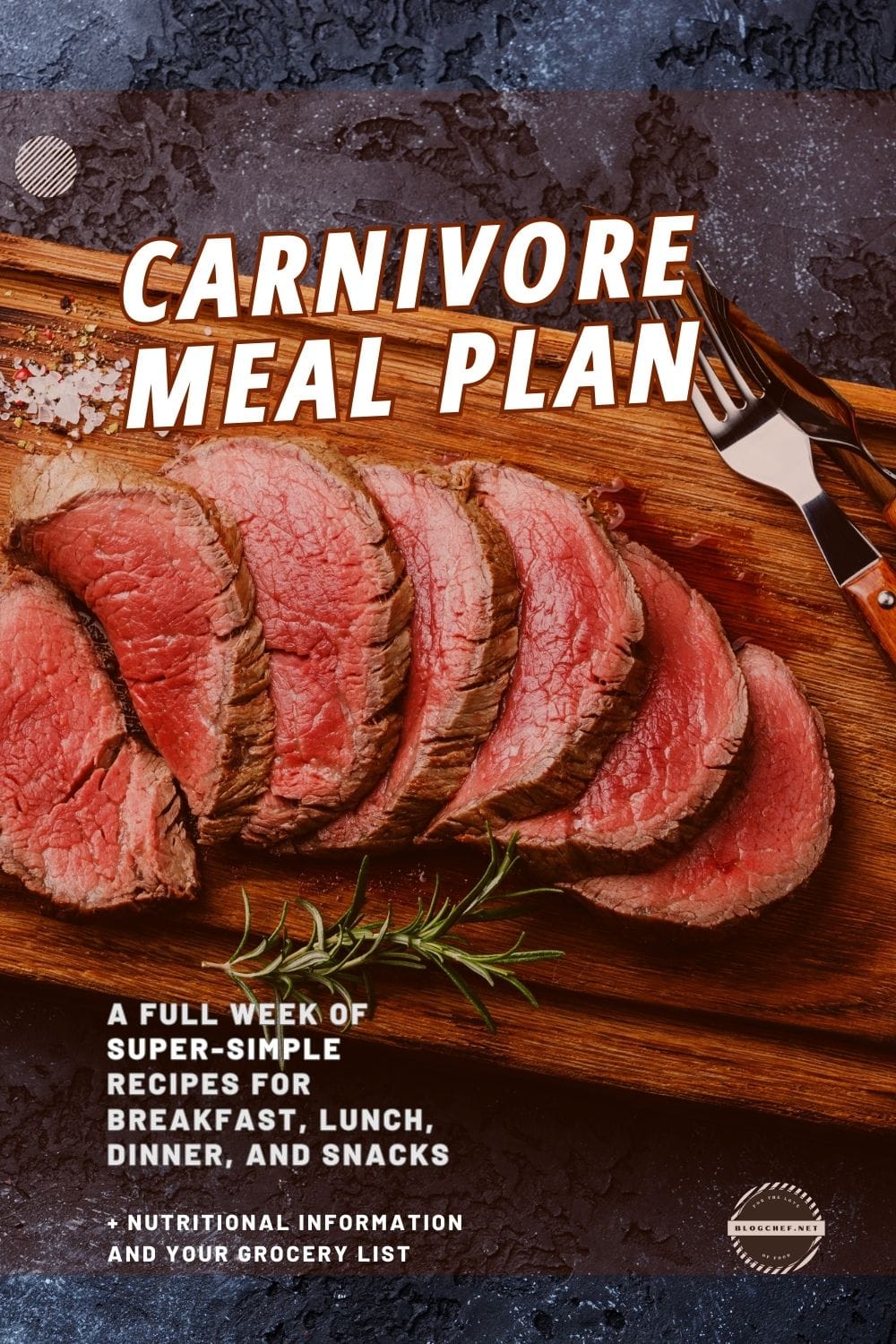
A strict carnivore diet focuses on foods sourced from animals only. That typically means meat, poultry, fish, eggs, and, possibly, some low-lactose dairy like butter or aged cheese. The usual goal is to keep carbohydrates extremely low by avoiding plant foods. In other words, no grains, fruits, vegetables, legumes, nuts, or seeds.
Read next: Meal plans that make cooking easier
Foods to eat on a carnivore meal plan
The carnivore diet is all animal protein, all the time. You can eat:
- Meat: beef, bison, lamb, pork, venison
- Poultry: chicken, turkey, duck
- Seafood: salmon, sardines, tuna, shrimp, shellfish
- Eggs
- Animal fats: tallow, lard, ghee, butter, depending on your approach
- Optional dairy: aged cheese or low-lactose dairy if tolerated
- Drinks: water
Foods you can’t eat
Carbs generally are off limits. You do not eat these foods on a carnivore diet.
- Fruits and vegetables
- Grains and grain-based foods
- Beans and legumes
- Nuts and seeds
- Sugary foods, desserts, sweetened drinks
7-day carnivore meal plan
Here’s a simple 7-day carnivore-style menu you can use as a starting point. Feel free to swap meals between days based on what you enjoy and what’s easiest to cook.
These recipes are straightforward, but if you would complete prep instructions, calorie and macro counts, plus a grocery list, you can download our Carnivore meal plan and guide for $4.99.
Day 1
Breakfast. Scrambled eggs with ground beef
Lunch. Burger patties (no bun)
Dinner. Baked chicken thighs
Snack. Hard-boiled eggs
Day 2
Breakfast. Eggs fried in butter
Lunch. Tuna mixed with chopped hard-boiled egg
Dinner. Sirloin or ribeye steak
Snack. Beef jerky with no added sugar
Day 3
Breakfast. Omelet with leftover chicken
Lunch. Ground beef bowl
Dinner. Baked or pan-seared salmon
Snack. Sardines
Day 4
Breakfast. Eggs and bacon
Lunch. Leftover salmon or tuna
Dinner. Pan-seared pork chops
Snack. Cheese slices
Day 5
Breakfast. Scrambled eggs with sausage
Lunch. Burger patties
Dinner. Rotisserie chicken
Snack. Bone broth
Day 6
Breakfast. Egg muffins or reheated scrambled eggs
Lunch. Chicken breast with butter
Dinner. Ground beef skillet
Snack. Pork rinds
Day 7
Breakfast. Steak and eggs
Lunch. Tuna or salmon with egg
Dinner. Meatballs
Snack. Hard-boiled eggs
Pros of the carnivore diet
These are the advantages of an all-protein diet.
- Simple. The rules are simple: Eat only animal protein and minimal carbs. This simplicity makes for fewer decisions, fewer ingredients, and easier grocery shopping.
- Satisfying. High protein meals are generally satisfying, which minimizes snacking.
- Low sugar. Cutting sugar and packaged foods can be a positive change for many people.
- Can help identify sensitivities and triggers. The carnivore diet is restrictive. For that reason, it can be used to identify sensitivities and food triggers. To do that, you’d start with the protein-only diet and add back other foods one at a time to monitor how they affect you.
Cons of the carnivore diet
The disadvantages of eating only animal protein are significant.
- No fiber. Constipation and digestive discomfort are common complaints when plant foods are removed.
- Potential nutrient gaps. Removing fruits, vegetables, legumes, and whole grains lowers your intake of certain vitamins, minerals, and beneficial plant compounds.
- High saturated fat. Depending on how you implement the carnivore diet, your saturated fat intake can climb quickly.
- Hard to sustain socially: It can be tough to dine out or eat with family when your food choices are limited to proteins only.
- Limited long-term research. There isn’t a lot of clinical data on how an all-animal-food diet affects most people.
Health considerations
I’m not a doctor, and this isn’t medical advice…but you should know the carnivore diet is restrictive. That can be problematic depending on your current health situation. Always talk to a physician before making a radical diet change, and consider the potential health consequences, which could include:
- Heart health and cholesterol. A meat-heavy diet can be high in saturated fat, which may raise LDL (the bad stuff) cholesterol in some people. If you have high cholesterol or a history of heart disease, talk with a healthcare professional first.
- Kidney health. Very high-protein diets can be risky for people with or predisposed to kidney disease. If you have kidney concerns, get medical guidance before increasing protein significantly.
- Digestive changes. Bowel habits can change when you restrict your fiber intake. Hydration and food choices can moderate this effect, but you may still struggle.
- Electrolytes and “keto-style” adjustment. Limiting your carb intake can create symptoms like low energy, headaches, fatigue, and muscle cramps. Staying hydrated can help.
- Pregnancy, diabetes medications, eating disorder history. Highly restrictive diets generally don’t match well with pregnancy, diabetes, or eating disorders.
What to expect
Everyone’s experience is different, but here are common “early days” patterns people report:
- Days 1 to 3. Cravings and routine changes. Digestion may shift as fiber disappears.
- Week 1. You may feel lower energy as you adjust to very low carbs. The urge to snack may lessen.
- Weeks 2 and beyond. Meals may feel repetitive unless you rotate protein types. Social situations can become the biggest challenge.
Tips for success on a carnivore diet
- Choose a base rotation of proteins. Ground beef, eggs, and rotisserie chicken are easy options. Don’t overlook canned fish!
- Buy in bulk when possible. Use your club store membership for ground beef patties, family packs of chicken, and frozen seafood.
- Cook once, eat twice. Leftovers make for easy lunches.
- Watch labels. Know that jerky, sausage, and deli meats can contain sugar and additives. Check labels on packaged foods. Make sure sugar, brown sugar, honey, molasses, corn syrup, or similar sweeteners are not listed. You can also check the carb count, which should be nearly zero.
- Keep cooking methods simple. Try pan-searing, grilling, roasting, or slow-cooking. For seasoning, salt is often all you need.
- Have a plan for eating out. Steak, burger patties, eggs, grilled fish are usually the easiest things to order.
Carnivore diet: simple, but restrictive
A carnivore meal plan can feel refreshingly simple, but it’s also one of the most restrictive diets out there. If you’re curious, consider approaching it as a short-term experiment, pay attention to how you feel, and don’t ignore red flags like persistent constipation, dizziness, or worsening labs. If you have underlying health conditions, it’s worth checking in with a healthcare professional or registered dietitian before you start.
Nutrition note: This content is for general informational purposes only and is not medical advice. Individual needs vary. Consult a qualified healthcare professional before making significant dietary changes.